
Infrared Thermography for Commercial Roofers: Detecting Hidden Moisture Before Repairs
Embark on a journey through the world of Infrared Thermography for Commercial Roofers: Detecting Hidden Moisture Before Repairs, where cutting-edge technology meets practical solutions for detecting elusive water damage before it escalates into costly repairs.
Delve into the intricacies of infrared thermography and its vital role in safeguarding commercial roofs against hidden moisture infiltration.
Infrared thermography is a non-invasive technology that uses thermal imaging cameras to detect differences in temperature on the surface of an object or structure. In the context of commercial roofing, infrared thermography is a valuable tool used to identify areas of hidden moisture within the roofing system.
Infrared thermography can identify areas of hidden moisture by detecting temperature variations on the surface of the roof. Moisture trapped within the roof system will retain heat differently than dry areas, creating temperature differences that are visible through thermal imaging.
By pinpointing these anomalies, commercial roofers can accurately locate areas of potential water infiltration without the need for destructive testing.
Early Detection
Infrared thermography allows for early detection of moisture issues before they escalate into more extensive damage, saving time and money on repairs.
Non-Destructive
Unlike traditional methods that require invasive testing, infrared thermography is non-destructive, preserving the integrity of the roof during inspections.
Efficiency
With the ability to quickly scan large areas, commercial roofers can efficiently survey the entire roof for moisture issues in a timely manner.
Accuracy
Thermal imaging provides accurate data on the location and extent of moisture infiltration, enabling targeted repairs and maintenance.
Detecting hidden moisture is a critical task for commercial roofers as it helps in identifying potential issues before they escalate into major problems. Moisture trapped within a commercial roof can lead to various complications if left undetected and untreated.
One real-life scenario involves a commercial building where hidden moisture was detected early through infrared thermography. The roofers were able to pinpoint the areas of concern and address them promptly, preventing extensive water damage and avoiding costly repairs.
In another case, during a routine inspection using infrared thermography, roofers discovered hidden moisture in the roof system of a warehouse. By addressing the issue immediately, they avoided potential structural damage and preserved the integrity of the building.
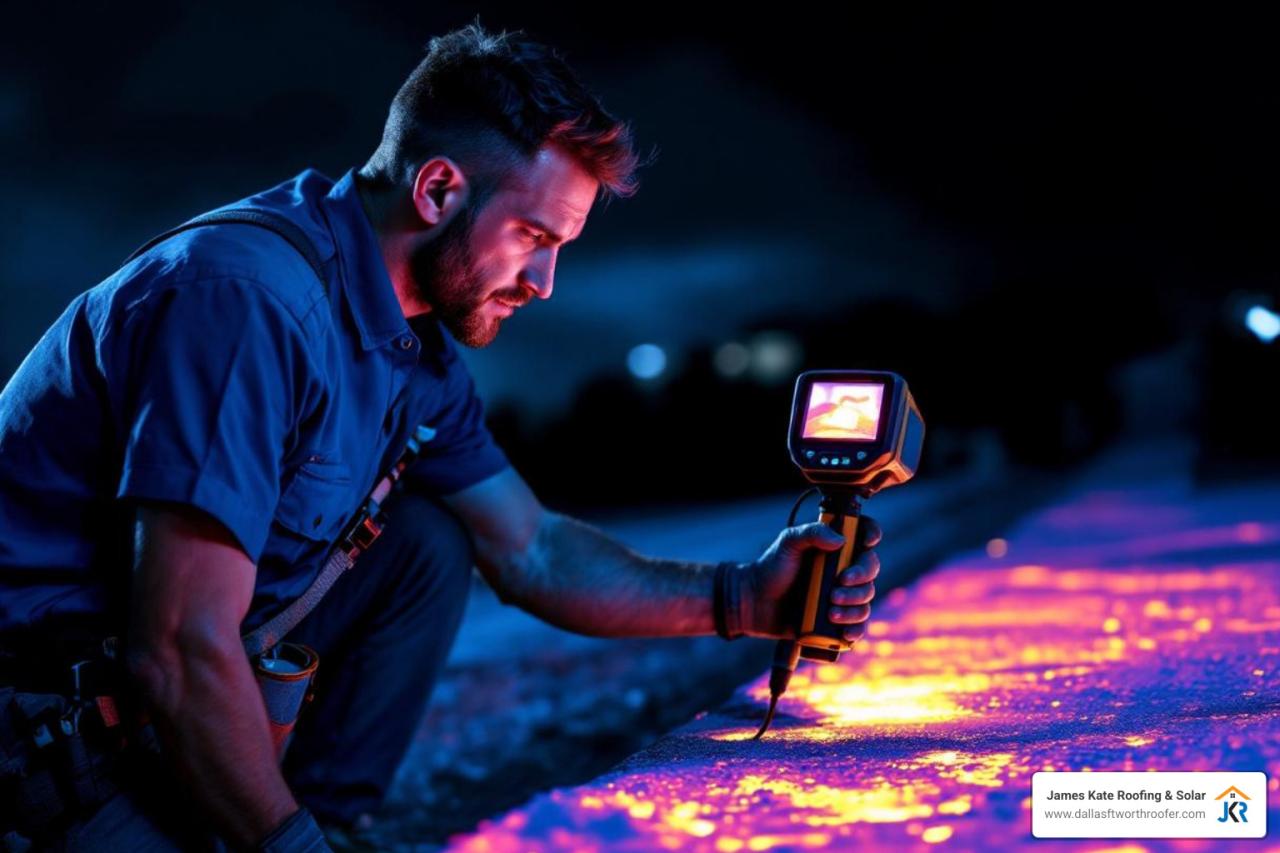
Infrared thermography is a non-invasive technique used to detect hidden moisture in commercial roofs. By utilizing infrared cameras, roofers can identify areas of concern without having to physically remove any materials, saving time and resources.
Infrared thermography works by detecting the heat emitted from an object or surface. When moisture is present in a commercial roof, it alters the thermal properties of the materials, causing temperature variations that can be captured by the infrared camera.
Infrared cameras are equipped with sensors that can detect infrared radiation emitted by objects. This radiation is then converted into a thermal image, which shows temperature variations on the surface being scanned.
Infrared cameras can detect temperature differences as small as 0.1 degrees Celsius, making them highly sensitive tools for moisture detection.
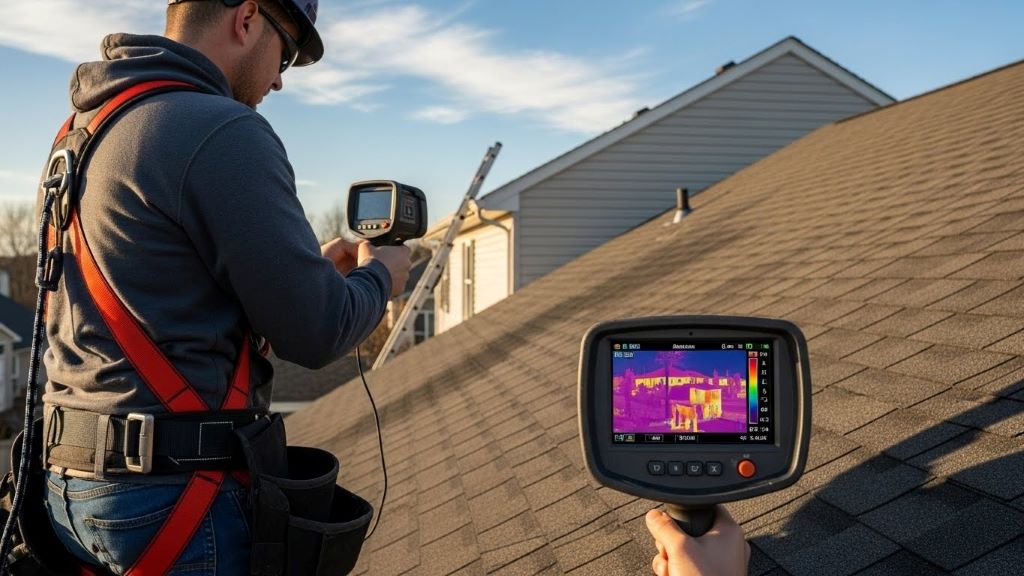
Infrared thermography is a valuable tool for commercial roofers to detect moisture within roofing systems. Different types of moisture can be identified using this technology, ranging from surface moisture to hidden moisture that may not be visible to the naked eye.
Surface moisture refers to water that is present on the exterior of the roof, often due to rain or other external factors. This type of moisture is usually easier to detect using infrared thermography as it is closer to the surface.
On the other hand, hidden moisture is trapped within the layers of the roof and can be more challenging to identify. This type of moisture may not show visible signs but can lead to significant damage if left undetected.
One of the main challenges in detecting specific types of moisture with infrared thermography is differentiating between water and other materials that have similar thermal properties. For example, insulation materials or wet substrate layers can sometimes produce false positives, leading to inaccurate results.
Additionally, the depth of the moisture can also impact the accuracy of the detection, as infrared thermography is limited in its ability to penetrate deep into the roof layers.Overall, understanding the different types of moisture that can be detected and the challenges associated with each is crucial for commercial roofers using infrared thermography to effectively identify hidden moisture before repairs are needed.

Early detection of hidden moisture in commercial roofs offers several advantages. By identifying moisture issues at an early stage, commercial roofers can prevent structural damage and extend the lifespan of the roof. This proactive approach not only saves time and money but also ensures the overall integrity of the building.
Early detection of hidden moisture allows commercial roofers to address the problem before it escalates into more significant structural issues. By pinpointing areas of concern early on, repairs can be made promptly, preventing potential leaks, mold growth, and deterioration of the roofing materials.
This proactive approach helps maintain the structural integrity of the building and avoids costly repairs in the future.
Detecting hidden moisture in commercial roofs at an early stage can significantly increase the lifespan of the roof. By addressing moisture issues promptly, commercial roofers can prevent damage to the roofing system, insulation, and underlying structure. This proactive maintenance approach helps the roof remain in optimal condition for a longer period, reducing the need for premature replacement and saving on long-term maintenance costs.
Several case studies demonstrate how early detection of hidden moisture has saved time and money for commercial roofers. For instance, a commercial building in [City] experienced a minor leak that was detected early through infrared thermography. By addressing the issue promptly, the roofers prevented further damage and avoided costly repairs.
Another example is a warehouse that underwent routine thermal imaging inspections, leading to the discovery of hidden moisture in the roof. The early detection allowed for timely repairs, preventing structural damage and extending the lifespan of the roof.
How does infrared thermography help in detecting hidden moisture in commercial roofs?
Infrared thermography detects temperature differences on the roof’s surface, pinpointing areas of potential water intrusion that are not visible to the naked eye.
What are the risks associated with undetected moisture in commercial roofs?
Undetected moisture can lead to mold growth, structural deterioration, and compromise the integrity of the roof, ultimately resulting in costly repairs and potential safety hazards.
Can infrared thermography differentiate between surface moisture and hidden moisture in commercial roofs?
Yes, infrared thermography can distinguish between surface moisture caused by external factors like rain and hidden moisture trapped within the roof layers, providing valuable insights for targeted repairs.